
Case study · Crankstart · San Francisco · 2024
Streets to Stability
A report and website for Crankstart that shows San Francisco’s homelessness system the way an unhoused person meets it: as a maze, and as people.
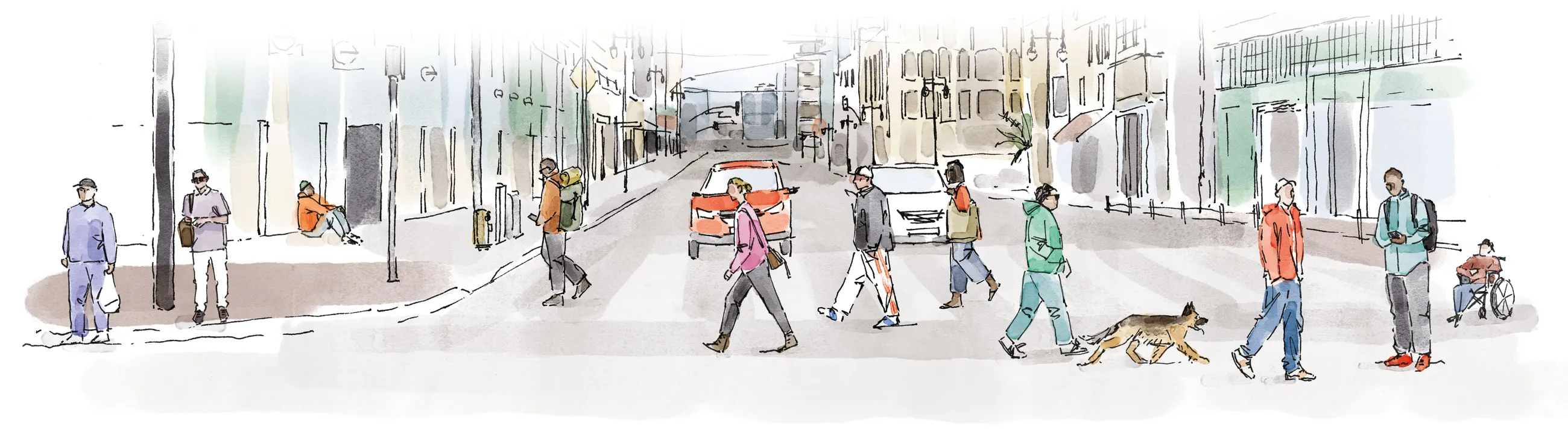
The opening of the site: San Francisco at street level.
The brief
San Francisco is known for the Golden Gate Bridge and as the birthplace of Airbnb, OpenAI, Levi Strauss and Uber. It has also become known for the 8,300 people who sleep in its doorways, cars and tents on any given night.
Billions of dollars and two decades of work have not changed that, and there is no accurate account of what the City spends. Crankstart, a San Francisco family foundation, wrote a plan a mayor could act on. We made it something people could see: who is homeless, what the system looks like from the inside, and what to change.
- Client
- Crankstart
- Released
- October 2024
- Delivered
- Interactive website, 108-page report, printed booklet
- JFA’s role
- Creative direction, data visualization, illustration and design
01 · Who this is about
About 20,000 people face homelessness in San Francisco each year: children, veterans and seniors, with communities of color hit hardest.
Behind the numbers are people fleeing domestic violence, battling addiction, escaping violence in their home countries or managing mental illness, and people who were housed until a job loss or a medical crisis. So the site opens on a street, not a chart, and draws everyone in watercolor.
It is easier to keep someone housed than to help them leave a tent, RV or doorway.
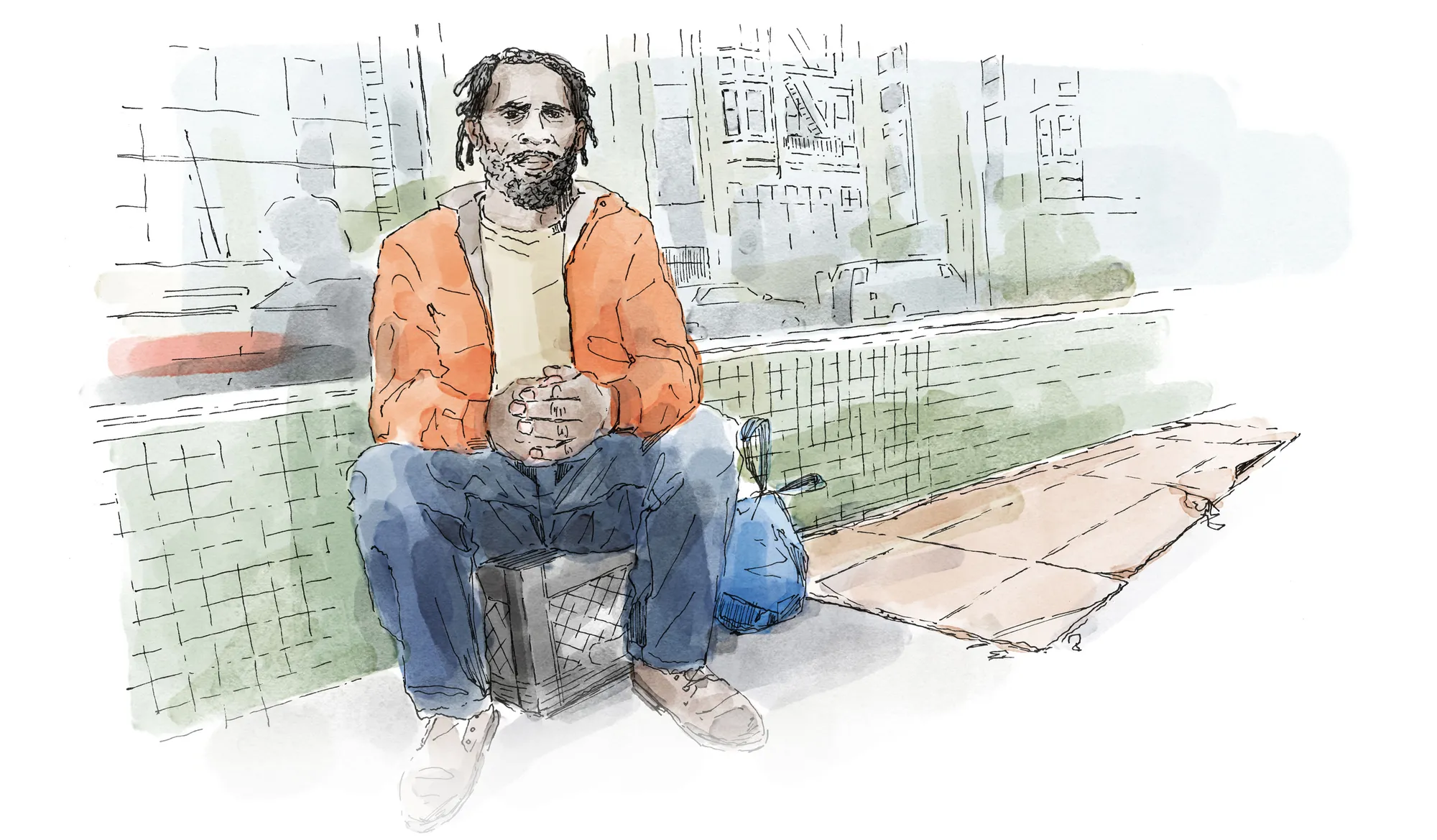
02 · Personas
Meet the people before the chart.
Six composite characters, built from demographic data and the stories of people who have lived it, so no one real is identified. Each is painted, not photographed.
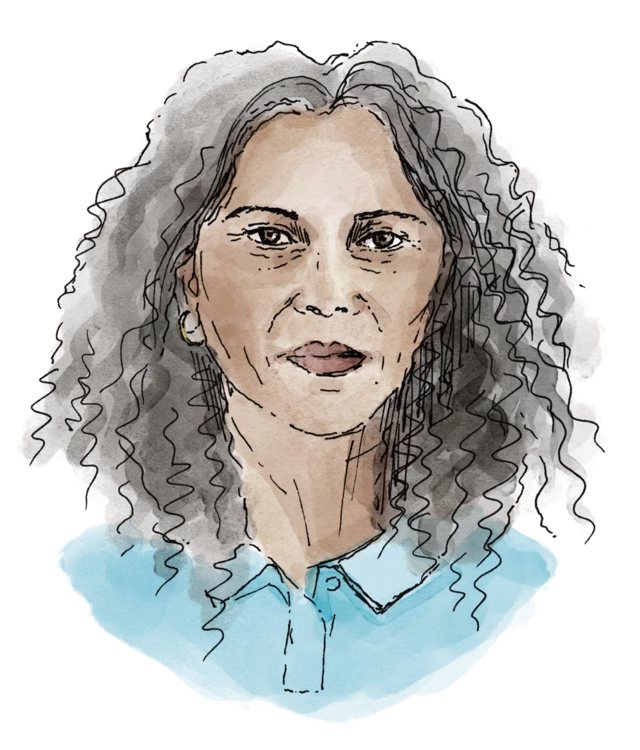
Maria
45, a mother. She fled her home with her daughter to escape an abusive husband, and is looking for stable housing for them both.
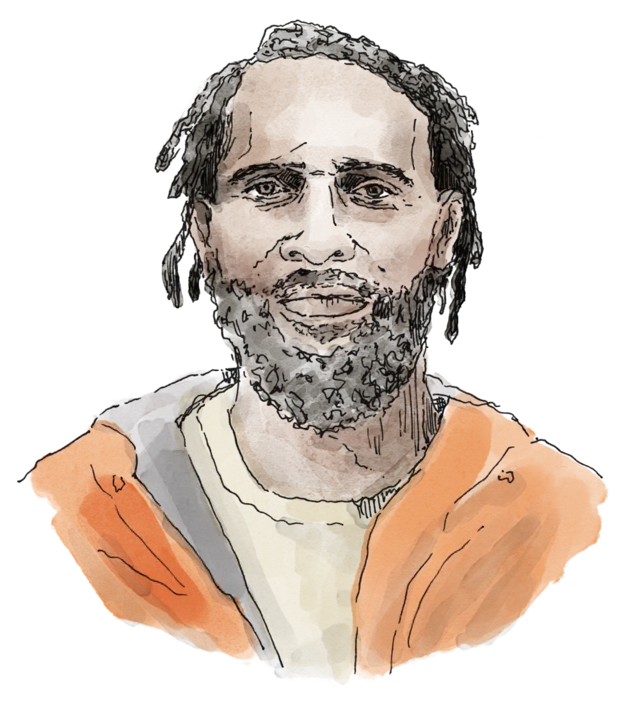
Cody
39. Unsheltered since his mother died when he was young; addiction, mental illness and short jail stays have kept him on the street for nearly 20 years.
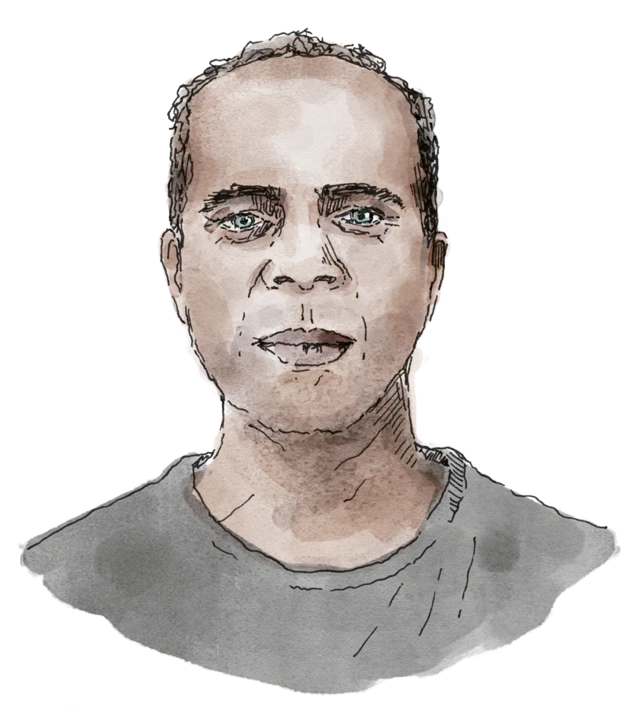
Victor
A veteran injured in Afghanistan who can no longer walk. When the family business closed, he lost his job, then his home.
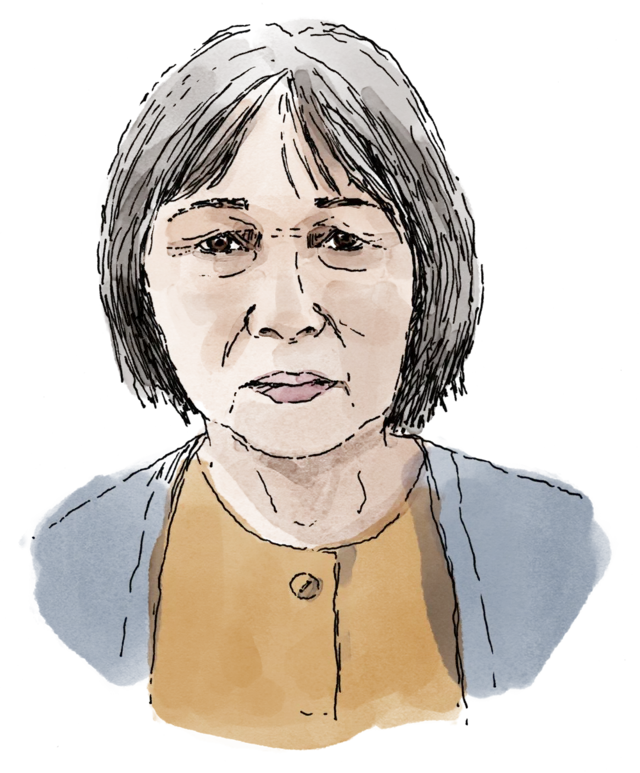
Selena
Lived in Chinatown for 25 years. After her husband died, her landlord converted the apartment to condos and evicted her.
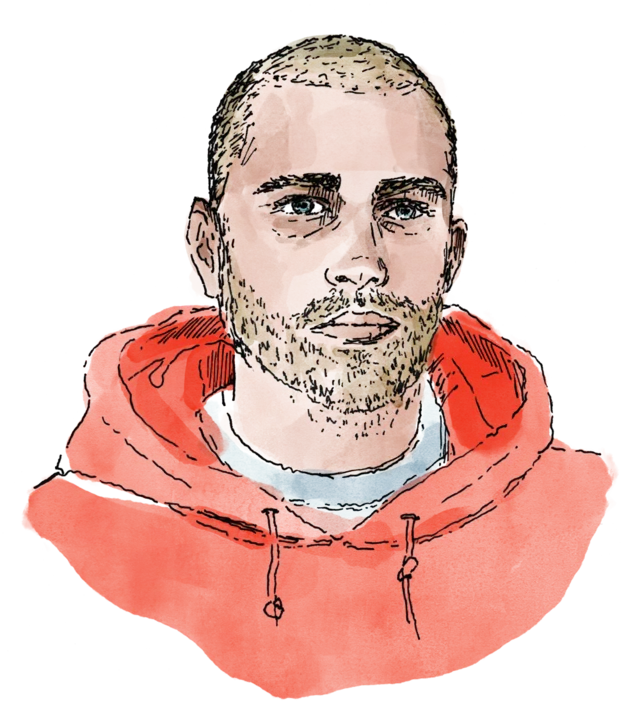
Frank
34, homeless for the first time. An injury stopped his work, the bills went unpaid, and now he lives in his car.
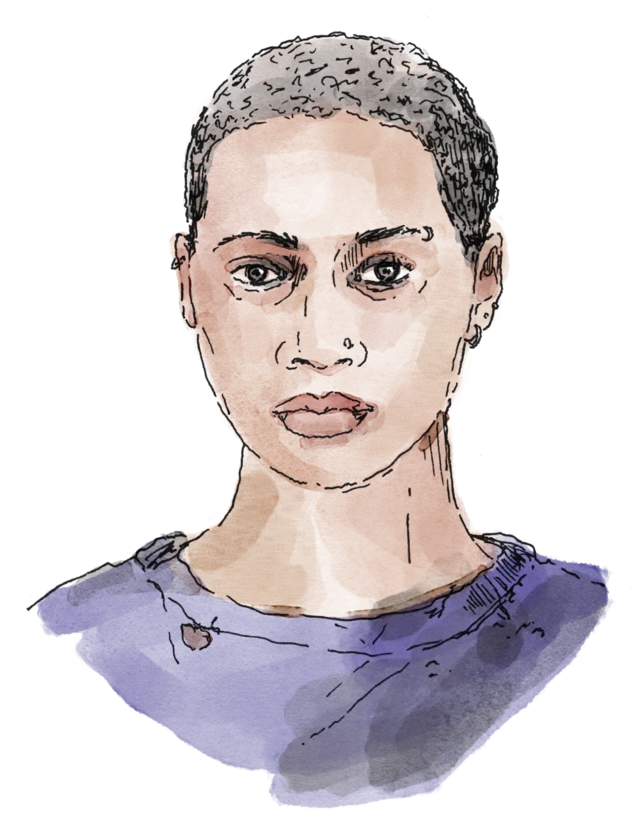
Yara
A transgender youth who left home at 18 after bullying and conflict with their parents, and wants to finish school.
03 · The system
This is the maze that unhoused people seeking care in San Francisco must navigate.
More than 230 providers receive public money for healthcare, housing, behavioral health and social support. Nine City departments fund them through around 10,000 contracts.
Services overlap, so a person may need to work through 15 to 30 providers to get the help they need. When Frank, in the report, hits severe depression, he has more than 20 mental health providers to choose from, and no one to help him choose. The diagram puts all of it on one page.
04 · The flow
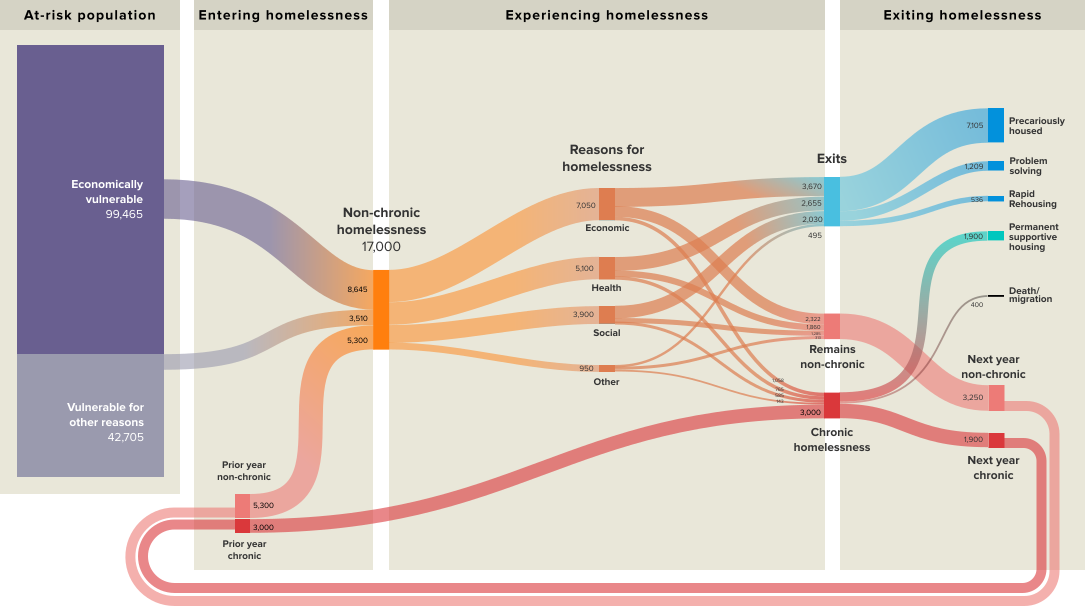
For every person who finds a roof, others lose theirs.
A second chart follows people in and out of homelessness at their real scale: from at risk, to entering, experiencing and exiting. Many cycle back in. Drawn this way, the points where timely help would change the outcome stand out.
“Each year about 400 people, around 2%, escape homelessness only through death or by leaving the city.”
05 · The plan
Twelve recommendations to make homelessness rare, brief and one-time.
Each comes with measurable targets, grouped by where it acts.
- 1–3
Prevent homelessness
Permit 46,000 affordable homes by 2032; keep people housed with timely financial help; address causes other than income.
- 4–6
Make homelessness brief
Better case management; easy digital services for people and providers; more and better interim and supportive housing.
- 7–9
Prevent it from recurring
Employment pathways to a living wage; intensive treatment for addiction and severe mental illness; a rebuilt Journey Home program.
- 10–12
Demand effective management
Simpler City governance and Bay Area coordination; outcomes-based contracts; more non-City public funding.
06 · What happened next
From a report to City Hall.
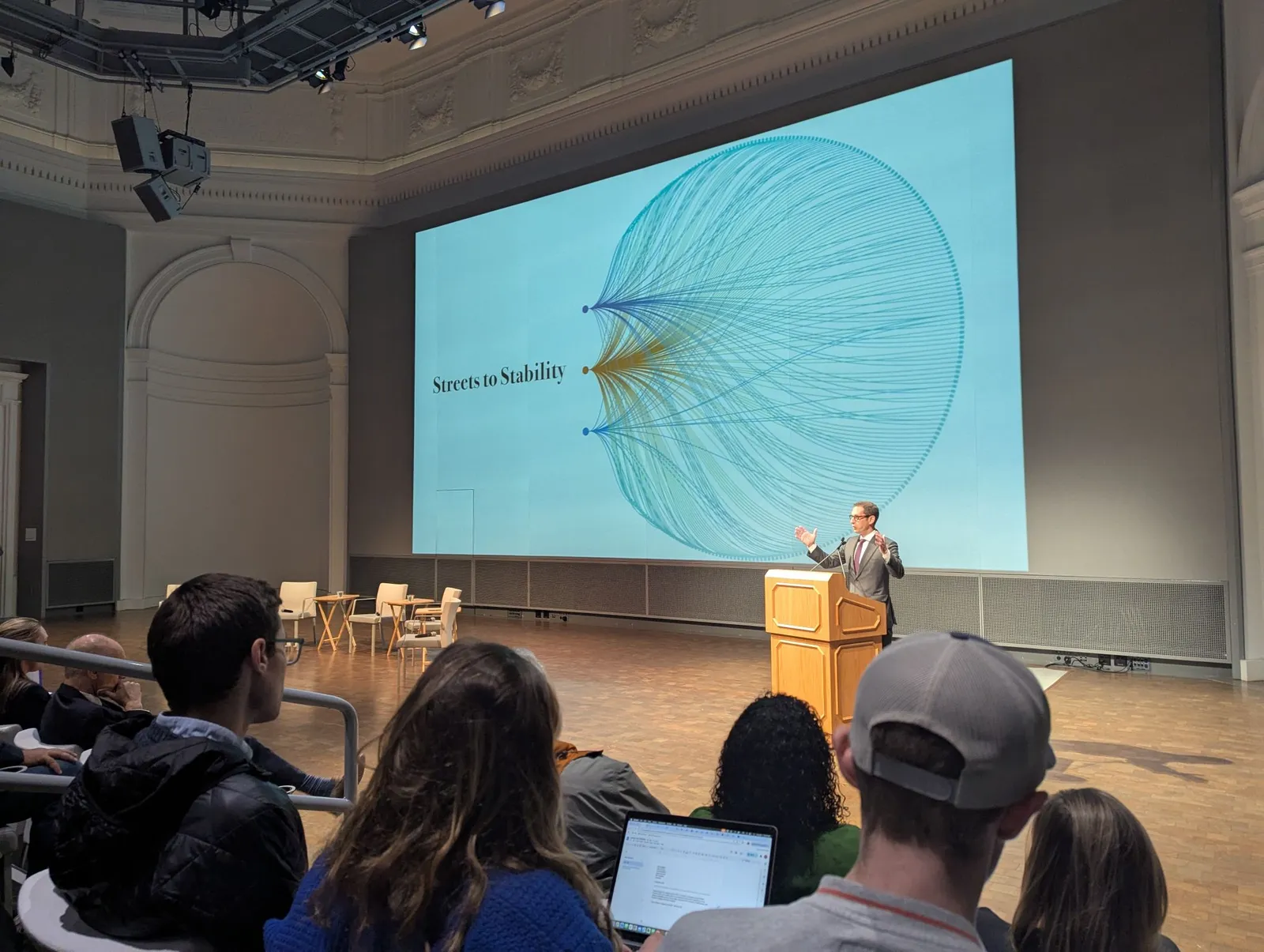
Crankstart released the report and site in October 2024. The San Francisco Standard ran the diagram as “the vast web of homelessness nonprofits in one baffling infographic.” After Daniel Lurie was elected mayor that November, the plan’s recommendations were adopted, and the report’s author, Kunal Modi, now leads the work as the City’s Chief of Health, Homelessness and Family Services.
In 2025 the diagram was on the big screen again, behind the mayor.
“Jason and his team demonstrated exceptional design and web development skills, seamlessly integrating data-rich charts with hand-drawn illustrations that humanized the data.”
- Jason Forrest Agency
- Jason Forrest (director, designer), Monika Tuchowska (designer), Kelsey Nanan (developer).
- Crankstart
- Kunal Modi (author), Ayushi Gummadi and Grace Lovell (project managers).
- Recognition
- Information is Beautiful Awards 2024, longlist, Current Affairs & Politics.
Crankstart
A San Francisco family foundation devoted to the foundations of a just society: better education, jobs with prospects, housing security, social welfare and civil rights. About 60% of its grants go to the Bay Area.